
Access Is Not Enough for First-Generation Hispanic Students
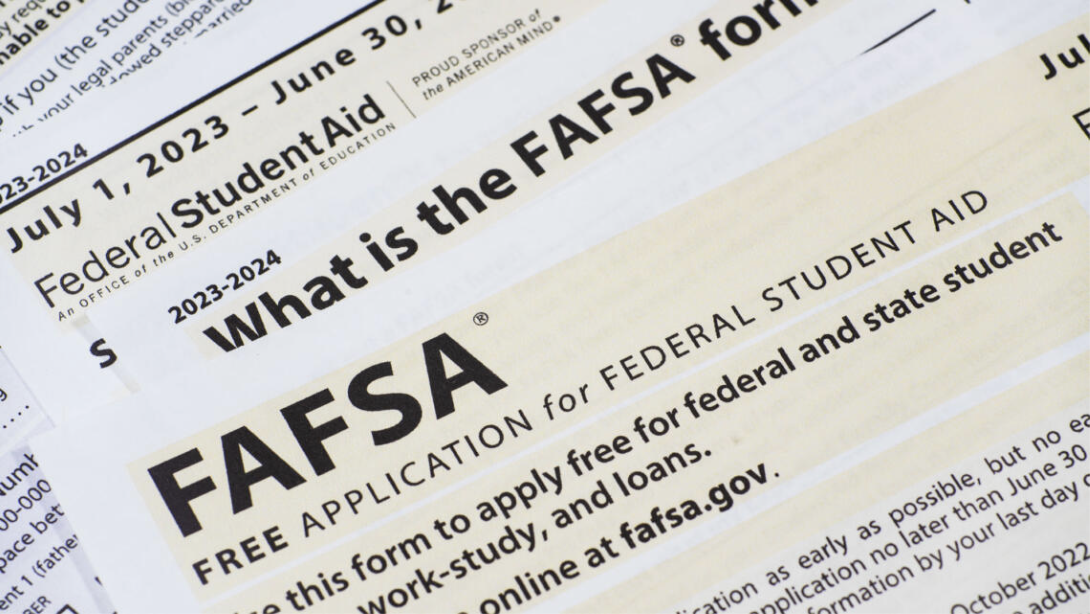
Photo by Richard Stephen
We continue to equate college access to college success. As the Free Application for Federal Student Aid (FAFSA) completion rates rise and new grant programs are announced, public officials frame these statistics as proof that higher education is becoming more equitable. Yes, access matters. The high school class of 2025 completed 17.5% more FAFSA forms than the class of 2024 at the same point in the year. However, a completed aid form is not directly correlated to a completed degree. Title V support for Hispanic-Serving Institutions is meant to expand institutional capacity, not guarantee that an individual student can stay enrolled when their finances become unstable halfway through the semester.
Federal programs for college access grants are widely offered to expand educational opportunities for underrepresented students. Evidence of this progress has been demonstrated in laws like the Higher Education Act, Title V funding for Hispanic-Serving Institutions, and jurisdictional in-state tuition policies for undocumented students. That said, little attention is paid to how these policies fail to address the structural and cultural barriers that continue to affect first-generation Hispanic students once they enroll. These federal and state initiatives increase access to higher education for some students, yet they are insufficient in ensuring degree completion—by overlooking financial instability, family-based financial literacy gaps, and culturally responsive support systems. Through examining Title IV aid structures—federal financial aid programs established under the Higher Education Act that include grants, loans, and work-study and require annual FAFSA renewal—and common institutional policies in many universities, this research will discuss how federal program funding currently operates and propose how multi-year guaranteed aid packages, emergency micro-grants, first-generation coaching for students and parents, and bilingual FAFSA workshops could strengthen long-term success in higher education for first-generation Hispanic students and their families.
The gap between access and continued enrollment is where first-generation Hispanic students are often left behind. In a 2024 study by the University of Houston Clear Lake, researchers utilized a Texas community college to study 605 Hispanic students, 52.2% of whom identified as first-generation and 46.3% who had received some form of financial aid intervention. Yet, receiving aid did not show a significant relationship to continued enrollment. The problem is how unstable, confusing, and culturally mismatched the aid process can be for many families. In the study, financial aid employees and students both described first-generation Hispanic families as fervently supporting their children going to college, but not always knowing how to navigate the process. Staff said parents often came in with students, asked questions, and needed just as much guidance as the students themselves. Students also reported having learned about support too late after already struggling.
A second study on Hispanic students’ understanding of financial aid makes the problem even clearer. For Zachary Taylor at The University of Southern Mississippi, his evaluation of federal financial aid application instructions across 949 U.S. community colleges found the process confusing, lengthy, and full of acronyms, shifting deadlines, and institutional jargon. Taylor specifically points out how FAFSA is regarded as being written at roughly a 14th-grade level, which helps explain why families already managing language barriers, work schedules, childcare, and immigration-related fear can find this yearly process more intimidating and unapproachable. Students are not facing a one-time obstacle; they are facing recurring uncertainty. Colleges and policymakers need to stop congratulating themselves for opening the front door while ignoring what happens after students walk through it.
In Taina Morales’ 2020 dissertation at Rowan University, she performs a qualitative narrative inquiry on the financial aid process. Morales discusses students’ descriptions of the process as confusing, lengthy, and full of acronyms, shifting deadlines, and institutional jargon. The study also found that the aid process is annual and continuous, which means students are not facing a one-time obstacle; they are facing recurring uncertainty. FAFSA is written at roughly a 14th-grade level, which helps explain why families already managing language barriers, work schedules, childcare, and immigration-related fear can find the process more intimidating and unapproachable. Colleges and policymakers need to stop congratulating themselves for opening the front door while ignoring what happens after students walk through it.
To prevent this continued inaccessibility and ignorance within the financial aid system, there are numerous efforts that should be considered. First, colleges should move toward multi-year guaranteed aid packages for first-generation students whenever possible, especially for the institutional portion of aid they actually control. Since federal aid still requires annual FAFSA filing, institutions should at least reduce uncertainty on their side by guaranteeing several years of support as long as students remain enrolled and meet clear merit based standards. This is not an impossible fantasy as smaller-scale models already exist. Programs at institutions such as the University of Tennessee (Tennessee Promise) and the City University of New York (Accelerated Study in Associate Programs, ASAP) demonstrate how multi-year or guaranteed aid structures can be implemented in practice. These programs combine tuition support with structured expectations and, in some cases, advising or mentoring: a clear sign that institutions can design aid systems that reduce uncertainty rather than reproduce it. The UT System Promise Plus program guarantees eligible students free tuition and mandatory fees at participating University of Texas institutions for up to four years, depending on their degree program. Unlike federal Title IV aid, which requires students to complete the FAFSA each year and reverify their financial eligibility, these programs remove the anxiety of recurring administrative burden by guaranteeing support for multiple years upfront. Both systems are designed to provide financial assistance for tuition and educational expenses, but the key difference is that Title IV aid depends on a lengthy, annual application process with shifting requirements and deadlines, while the Tennessee Promise model offers stability and predictability.
Second, colleges that have sufficient funds should set up emergency micro-grants that treat financial disruption as a retention issue, not a personal failure. Students in these studies repeatedly described financial strain, unstable family resources, and the stress of balancing school with work and family responsibility. First-generation students are often constrained to take fewer credit hours because of their necessity to work, and researchers on undocumented first-generation students likewise found that barriers to financial resources and family obligations were common obstacles in students’ college experiences. No student should be pushed out of higher education because of rent or a medical bill—a reality Hispanic and other students of color are disproportionately faced with.
Finally, federally funded institutions should be required to treat barriers to financial aid forms as a family literacy issue, not just an individual student paperwork issue. That means bilingual FAFSA workshops, Spanish-language aid communication, and financial literacy programming for parents as well as students. It also means first-generation coaching should be incorporated into orientation, not once a student falls into crisis. Traditional college practices do not work well for first-generation Hispanic students because students often do not know who to ask, are embarrassed to seek help, or frequently wait until they are already in trouble. The lesson is not that outreach fails, rather that it is treated as a remedy rather than a preventative measure. A 2022 study at California State University interviewed undocumented-Hispanic students on challenges faced during the financial aid process. The researchers found that besides close family support, students often need bridging relationships that connect them to mentors, faculty, and people with institutional knowledge. In practice, that means students need trusted adults and peers who can translate college systems into something human and usable.
The broader conclusion from all of this is simple: there has been success in expanding Hispanic students’ attendance at higher-level institutions where they were not previously welcome. However, to continue these trends, we must create the infrastructure and pipeline for already-enrolled first-generation Hispanic students to stay. If lawmakers and universities want to claim that programs like Title IV and Title V expand opportunity, they should be judged not only by who gets admitted or who fills out a form, but by who can remain enrolled without constantly wondering whether one bureaucratic mistake or one family emergency will end their education. Access was never supposed to be the finish line. For first-generation Hispanic students, it is only the beginning.
Alessandra Shires (BC’29) is an Economics major from Miami, Florida. She is passionate about learning the intersection of business and law, with a particular focus on how legal and financial systems shape economic opportunity for entrepreneurs.
Edited by Reesa Venterea