
Beyond National Trends: The Evolving Healthcare Environment in New Mexico
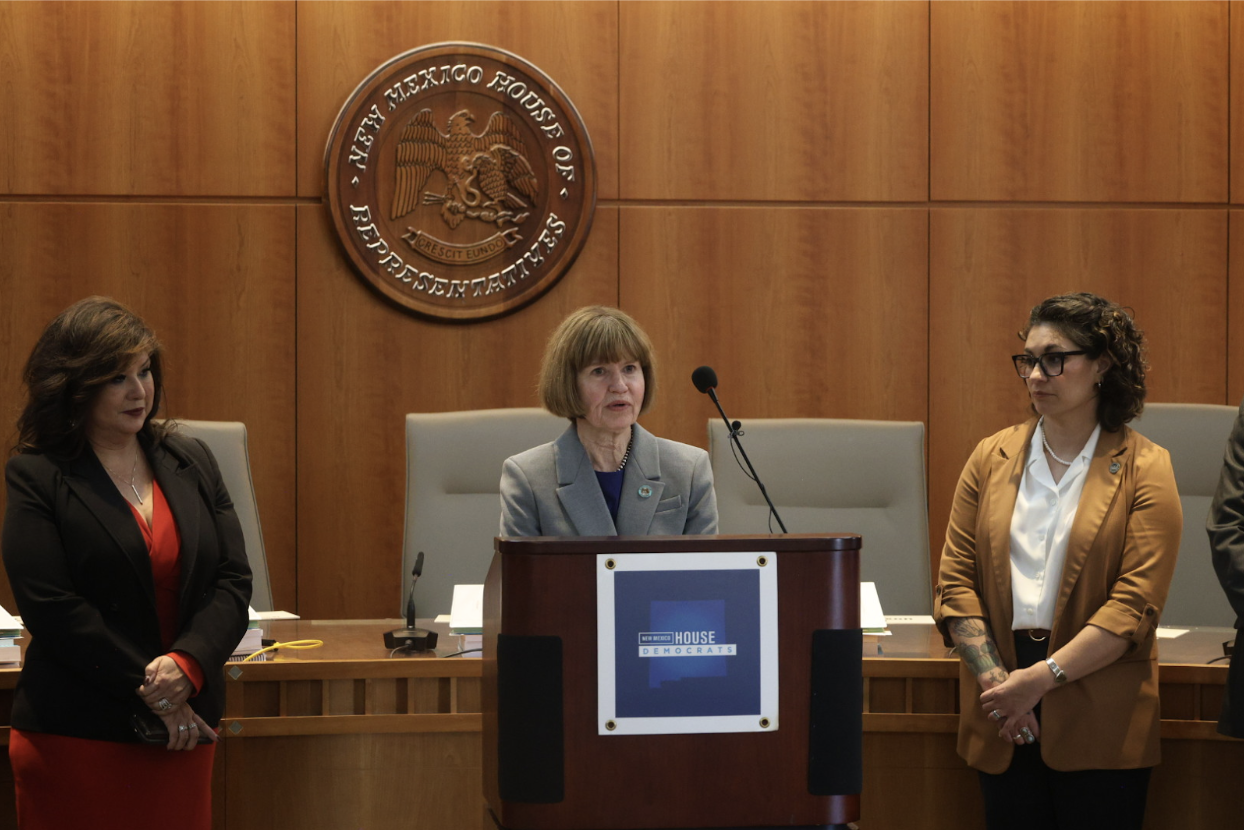
New Mexico Representative Christine Chandler (D-Los Alamos) speaking at the House Democrats’ news conference Feb. 14, 2026 as her Bill HB 99 is undergoing floor debate. Photo by Patrick Lohmann.
Abstract
Between 2019 and 2024, New Mexico (NM) has experienced an 8.1% decline in its healthcare workforce. While medical malpractice reforms are now a focus for lawmakers, specifically enacting caps on punitive damages, policy reforms have not kept pace with the urgency of the issue. Drawing on qualitative data collected with physicians practicing in New Mexico, as well as state and federal policymakers involved in healthcare policy, I argue that New Mexico’s physician shortage is not solely the result of national workforce trends but reflects policy misalignment between medical malpractice law, insurance structures, and state taxation policies that collectively increase financial liability for physicians practicing in the state. Consequently, the debate remains whether these reforms will adequately address the institutional causes of the physician decline, effectively recalibrating the balance between patient safety and physician retention.
Introduction
Medical malpractice laws are designed to protect patients and their right to reimbursement. They do so by ensuring they can recover losses when a clinician fails to provide the level of care that a similarly qualified clinician would have provided. In doing so, these laws also dictate the amount a patient can sue a physician for in a malpractice case: these limits are known as medical malpractice caps. In New Mexico (NM), the NM Medical Malpractice Limitation of Recovery Statute outlines these caps in certain cases. Presently, NM has limited the recoverable dollar amount for claims brought against a hospital or a hospital-controlled outpatient health care facility at six-million dollars, which does not include punitive damages related to these claims.
Punitive damages are designed to punish the defendant for egregious conduct and to deter similar behavior in the future. Historically, NM has not imposed limitations on punitive damages, creating much risk and uncertainty for physicians and insurers alike. As a result, liability insurance rates for physicians have increased rapidly. In response to growing concern for physician retention, NM policymakers recently enacted House Bill 99, which imposes caps on punitive damages, but it remains unclear whether these reforms will meaningfully influence provider stability. By implementing these policies, physicians are at risk for millions in compensatory damages and remain liable for millions more in punitive damages. Consequently, physicians are required to be insured with malpractice liability insurance.
While the requirement to have malpractice liability insurance is not unique to NM, the cost of premiums is a reflection of the amount necessary to compensate for high caps on collectable damages in malpractice cases in NM. Several studies have shown the best chance of containing the growth of malpractice premiums may be lowering malpractice caps. The reasoning behind this association is due to how insurers determine cost of premiums, which is in accordance with their expected losses to limit their exposure to high loss payouts. As caps are increased, the risk insurers take on also increases. To compensate for this risk, liability premiums must also increase.
In addition to the effects of medical malpractice policies in NM, physicians also face financial pressures from the state’s tax policies. Unlike most other states, NM imposes Gross Receipts Taxes (GRT) to medical services, which are taxes imposed on the total gross revenue of a business, regardless of profitability or expenses. Over recent years, NM policymakers have proposed several bills to eliminate GRTs on medical services–none have passed. While GRT has not been listed as the leading cause of decreased physician retention in NM, it is one concern that remains unresolved. Additionally, difficulty for policymakers to enact reforms speaks to the deep-rooted structures in need of amending to combat the loss of physician workforce.
Methods
This research article combines policy analysis with qualitative interviews to examine the structural factors contributing to physician workforce decline in NM. Primary data has been derived from legislative reports, healthcare workforce studies, and state policy documents related to malpractice law, insurance markets, and Medicaid reimbursement.
To supplement this analysis, interviews were conducted with physicians practicing in NM and policymakers involved in healthcare policy. These interviews focused on perceived barriers to practicing medicine in the state, including malpractice liability, projected outcomes for recent legislation, reimbursement structures, and workforce conditions.
Interviews were used to provide insight on how these policies affect physicians and healthcare services in practice. Due to the limited number of interviews conducted, the qualitative evidence presented in this article is intended to illustrate broader structural trends rather than provide a universal survey of physician experiences.
Interview Findings: Policymaker and Physician Perspectives
Interviews conducted with physicians and policymakers revealed shared concerns and differing perspectives regarding the factors contributing to NM’s physician shortage. Across interviews, both groups acknowledged that the state faces significant challenges in retaining physicians and maintaining access to care, particularly in rural areas. Policymakers and physicians alike identified malpractice liability, Medicaid reimbursement rates, and financial pressures associated with practicing medicine in NM as major contributors to the workforce decline. Unexpectedly, physicians agree that policymakers understood the issue as presented to them by provider advocacy groups; however, physicians specified that this understanding was developed recently and that concerns are not always accurately reflected by these advocacy groups.
Despite shared understanding of the issues, there are notable differences in how physicians and policymakers approach these challenges. Physicians primarily described these issues through their day-to-day experiences, emphasizing how malpractice insurance rates, litigation risk, gross receipts taxes, and Medicaid reimbursement rates contribute to colleagues’ and their own decisions to continue practicing in NM. Many of them recognize external factors for staying in NM, such as being closer to family members and lower cost of living, despite acknowledging the financial sacrifices they perceive themselves making. Several physicians explained that for many new and returning physicians, deciding to stay in NM is attributable to each physician’s tolerance for the financial sacrifices made and if the benefits of staying in NM outweigh the financial risks.
Conversely, policymakers framed the issue largely in terms of legislative and fiscal constraints in addressing physician retention. Interviews with state legislators revealed that while many reforms have received bipartisan support, the state’s balanced budget requirements and necessary fund allocation across many policy priorities constrains possible reforms.
The interviews highlight several key themes:
Perceived Litigation Risk in New Mexico
By implementing these policies, the state’s malpractice environment has created legal uncertainty among physicians in NM. Practicing physicians in NM have described an atmosphere in which litigation risk is perceived as unusually high compared to neighboring states. One physician practicing in Southern NM described how the malpractice environment can affect new providers entering the state:
“I wasn't even here when I was already involved in a lawsuit.”
This type of legal exposure contributes to the perception that practicing in NM carries a disproportionate amount of legal risk. Studies have supported this narrative, showing that NM has one of the highest rates of malpractice incidents per capita in the United States, with 4.46 malpractice incidents per 100,000 residents in 2024. One possible contributor to the frequency of malpractice claims may be connected to concerns about repeated exposure to malpractice litigation once a claim has been filed. Several physicians explained that once involved in a malpractice lawsuit, they may face a higher likelihood of future litigation, creating the perception that they remain visible to plaintiff firms evaluating potential cases. Research indicated that a single prior paid claim was associated with long-lived higher future claim risk, independent of whether a physician was practicing in a high- or low-risk specialty, or whether a state publicly disclosed paid claims.
In addition to the high frequency of malpractice claims, physicians interviewed also cited legal strategies that intensified perceived legal risk, describing that in complex malpractice cases, attorneys name multiple providers involved in a patient’s care to identify potential liability during discovery. In doing so, several physicians have been required to seek and finance legal representation to defend themselves even if they were only peripherally involved in the patient’s care. These procedures, in connection with one another, have contributed to a perception of heightened legal risk for physicians passed the threat of punitive damages. This contrasts the intended structure of malpractice claims, which are generally meant to focus on providers whose conduct directly constitutes a deviation from the standard of care.
Lived Effects of a Reduced Physician Workforce
The increased loss of healthcare providers in NM over the past five years has led to increased patient travel and stress on remaining physicians, ultimately decreasing care accessibility in the state. As physicians leave NM, the effects are particularly pronounced in specialty care. Several physicians interviewed described increasing difficulty finding specialists for referrals, saying they feel they don't have enough help due to a lack of specialists in the area. One of the most documented effects of this is patients having to travel much farther, sometimes out of state, in order to receive care. Residents in rural areas of NM, which make up most of the state’s counties, are in especially short supply. Many rural counties lack any local psychiatrists, cardiologists, and other key specialists, with 14 NM counties having no obstetrics and gynecologists. The lack of providers forces many patients to travel, or simply forgo treatment, while those providers who stay in rural practice manage long waitlists for appointments and services. To receive necessary care in a timely fashion, rural residents are 60% more likely to travel out of state for specialized care, increasing healthcare costs by 40%, a surcharge that is likely to be exacerbated due to New Mexico’s high Medicaid beneficiary population. Patients are forced to choose between travelling to receive care, forgoing treatment, or joining a mounting waitlist ranging from 36–42 days on average for specialty appointments and to four-six months for routine care.
Rural Geography and Medicaid rates
The effects of the depletion of the physician workforce in NM is uniquely shaped by the state’s reliance on Medicaid coverage. New Mexico has the highest percentage of Medicaid beneficiaries in the country with approximately 40% of residents covered by Medicaid, about twice the national average. For physicians, that means relying more heavily on Medicaid reimbursement rates, which are the amounts state-administered programs pay healthcare providers for services. With Medicaid reimbursing approximately 78% of the cost of care, and private insurers reimbursing nearly 145% of the cost of care on average, physicians rely on privately insured patients to subsidize Medicaid patients. While the state of NM recently increased these rates by $409 million in 2023, there is a larger share of Medicaid beneficiaries in NM than in other states, limiting physician revenue diversification. Physicians interviewed for this article have expressed that reimbursement rates have improved since the increase, however, they are still insufficient in accounting for overhead, staff, and other business expenses. One physician explained that in order to compensate for the money lost by providing for Medicaid beneficiaries, they would have to increase patient volume dramatically. In addition to physicians interviewed, policymakers interviewed also agreed that Medicaid reimbursement rates are crucial to making NM an attractive place to practice medicine. While Medicaid's importance is generally agreed upon, physicians describe requiring higher reimbursement rates in some areas of medicine such as outpatient services to adequately cover costs for treating Medicaid patients. Since reforms to improve physician compensation were recently enacted, policy addressing these concerns may be delayed due to economic constraints policymakers feel they are under. According to one legislator interviewed, financial constraints have posed a significant obstacle in passing legislation to better NM physician retention.
New Mexico HB 99
In response to growing concern for physician retention, NM policymakers recently enacted House Bill 99, which imposes caps on punitive damages in an attempt to lower malpractice insurance premiums. However, it remains unclear whether these reforms will meaningfully influence provider stability in NM, considering the rate at which physicians are leaving the state and the damage already endured from the past five years of significant decline. NM HB 99 caps punitive damages for independent physicians and clinics at $1 million, locally-owned hospitals at $6 million, and large hospitals at $15 million. Interviewed policymakers explained the purpose of HB 99 is to lower payouts and insurer risk, thereby lowering malpractice premiums. By implementing this legislation, NM joins twenty-three states across the US in imposing caps on punitive damages in medical malpractice cases. However, the caps created are still significantly higher than caps in neighboring states. Physicians interviewed explained that while creating a cap was a step in halting the decrease of physician workforce, it is the first of many that must be taken.
Policymakers acknowledged that HB 99 would not serve as the “silver bullet” in efforts to address New Mexico’s physician shortage, but as a part of a collective effort. Several legislators outlined many ongoing reforms to address physician tax reforms, additional residency opportunities in the state, and continuing to better Medicaid reimbursement rates and the malpractice legal climate in NM. A major inhibitor in making large strides in policy reforms is difficulty in passing large-scale, fiscally impactful legislation while remaining within the state’s budgetary limitations. As one legislator explained during an interview, several policy proposals aimed at improving physician retention are introduced and those, among all other bills to address many other issues, must compete to secure their proposed amount of funding. Policymakers also explained that legislation to increase residency availability, increase Medicaid reimbursement rates, and eliminate gross receipts taxes for physicians have been receiving bipartisan support in hearings, attributing difficulty passing these bills solely to financial constraints. One legislator interviewed, who sponsored one of the reforms, explained:
“It's just a competition, in a way, for thousands of different ideas people have brought into that session, and you're fighting for oxygen for your idea or two.”
In this way, differences between physician and policymaker perspectives appear to reflect competing fiscal priorities, rather than a lack of awareness among legislators regarding the severity of the physician shortage. Policymakers interviewed consistently acknowledged the importance of reforms aimed at increasing physician retention, yet they emphasized that such proposals must compete with numerous other funding priorities during the legislative process. As a result, even policies that receive bipartisan support may take multiple legislative sessions to secure sufficient funding.
While these constraints explain the gradual pace of reform, they also illustrate the structural challenges New Mexico’s healthcare system faces. Reforms such as HB 99 are necessary steps toward addressing physician concerns, but their impact may be limited if broader structural issues affecting physician retention are not addressed at a faster pace.
Discussion and Conclusion
New Mexico’s declining physician workforce is more than a reflection of national physician shortages. This article demonstrates the role of state institutions and their interactions creating a practice environment that physicians view as legally and financially burdensome. The connection between medical malpractice law, insurance markets, reimbursement structures, and state taxation policies are key contributors to the continued loss of providers in NM. While each of these policies serve a purpose: protecting patient rights, expanding healthcare coverage, and maintaining state revenue, the current legislature creates a skewed legal environment against providers.
Interviews conducted with physicians and policymakers reveal that there is common recognition of these challenges. Furthermore, interviews identified that the pace of reforms are shaped by financial constraints within the legislative process. Policymakers must distribute limited resources across various priorities, requiring reforms aimed at improving physician retention to compete with numerous other policy initiatives for funding and legislative attention.
Recent legislation, such as House Bill 99, represents an attempt to resolve one component of the issue by limiting punitive damages and reducing potential malpractice liability. However, policymakers themselves have acknowledged that similar reforms are unlikely to resolve the physician shortage altogether. Addressing the workforce decline will likely require a broader set of policy changes, including continued adjustments to Medicaid reimbursement rates, expanded residency programs, and reforms to taxation policies affecting medical practices.
To conclude, the physician shortage in NM illustrates how complex policy environments shape healthcare workforce outcomes. While policymakers have begun to implement reforms, their effectiveness will rely significantly on how quickly additional legislation can be enacted to address physician concerns. Without sustained attention on these underlying institutional factors, the state may continue to face challenges in retaining the medical workforce necessary to ensure accessible healthcare for its residents.
Avellana (CC’29) is a Staff Writer majoring in Computational Biology with a minor in political science. She is interested in the ethics and accessibility of healthcare and its effect on society.
Edited by Jazzlee Cerritos