
Patricia Lynne Bessie (CC'26) on the Power of Research and Public Health Policy
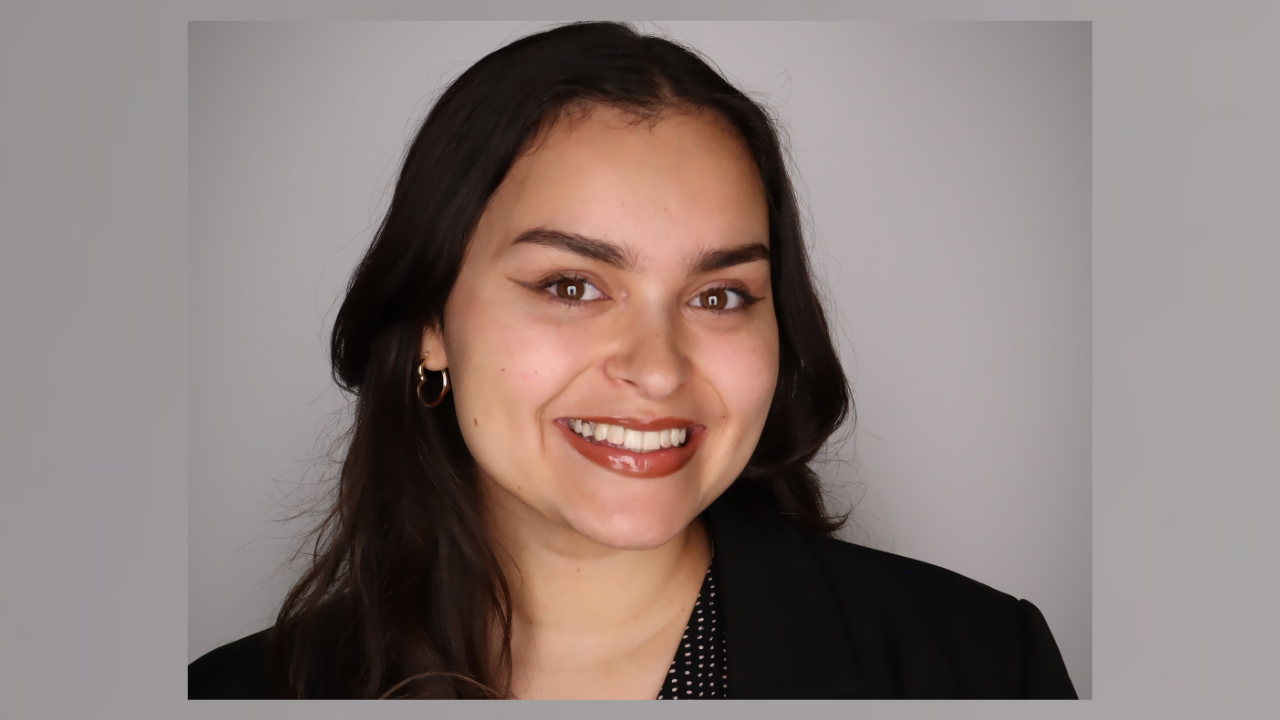
Picture courtesy of Patricia Lynne Bessie.
The Hispanic Pre-Law Review (HPLR) awards several Student Prizes each academic year, ranging from writing to editorial, and the Vilma Socorro Martínez Prize. Established in honor of distinguished attorney, Columbia Law alumna, and first woman President of the Mexican American Legal Defense and Educational Fund, the Vilma Socorro Martínez Prize is the publication’s highest honor. It recognizes an upperclassman who exemplifies Vilma's virtues of citizenship and scholarship.
The HPLR Selection Committee first nominates a handful of candidates for the Prize and evaluates them through a rigorous process. This year, the Committee selected Patricia Bessie (CC'26) as the honoree.
Patty majors in Political Science and Public Health and has an interest in criminal and health law. Academically, she is a Research Assistant at the Columbia Mailman School of Public Health's Epidemiology Department, where she is working under Prof. Manuela Orjuela-Grimm on the CAMINANDO study, which investigates the psychological implications for unaccompanied minors who immigrated to the United States from Latin America. Professionally, she is an Intern at the Manhattan District Attorney's Office in the Human Trafficking Unit. In the past, she has interned in the U.S. Senate for Sen. Kirsten E. Gillibrand, as well as awarded the Solomon & Seymour Fisher Civil Liberties Fellowship to intern for the New York Civil Liberties Union and the United Nations Millenium Fellowship.
Beyond academia and professional endeavors, she has helped advance HPLR's mission of publishing legal analysis, first as a Staff Writer and now as Managing Editor, while also fostering a sense of community through the interchange of ideas among her peers.
We talked to Patty about her research and legal interests:
Tell us about your research and its implications
Broadly, my research examines the impact of migration on youth from Latin America. Through in-depth interviews, I’ve learned about the challenges they face, including experiences with food and water insecurity before, during, and after migration. The work aims to better understand and support their well-being.
Why are you interested in criminal and health law?
My experience at the Manhattan District Attorney’s Office has actually solidified my interest in pursuing defense work rather than prosecution. It showed me that people aren’t simply “good” or “bad” as many cases are deeply complex. We need to know what led someone to act a certain way. Similarly, health doesn’t occur in a vacuum. Learning about human rights abuses, particularly at Rikers Island, reinforced my belief that incarceration is not rehabilitative. I’m interested in combining my commitment to people’s well-being with the law, and I see the intersection of criminal and health law as a meaningful way to do that.
As you graduate in May, what are your future goals?
I plan to pursue a dual MPH/JD degree to work at the intersection of public health and law. I was recently admitted to the Columbia Mailman School of Public Health in the SMS department, and I’m currently waiting to hear back about a scholarship before making my final decision.
What does receiving the Vilma Socorro Martínez Prize, the Review’s Highest Honor, mean to you?
Receiving this award is incredibly meaningful to me. English is not my first language as I came to the U.S. at nine years old without knowing how to read or write it, and only spoke very limited, broken English. I remember being pulled out of class to learn the basics, like the difference between “on” and “in” the box. To now be recognized for my writing in English is something my nine-year-old self never would have imagined, and it reflects how far I’ve come. I am thankful for this recognition and to my managing editor Sylvia and José and Mariley who helped me throughout this entire process.