
The Instability of Living Between Policies
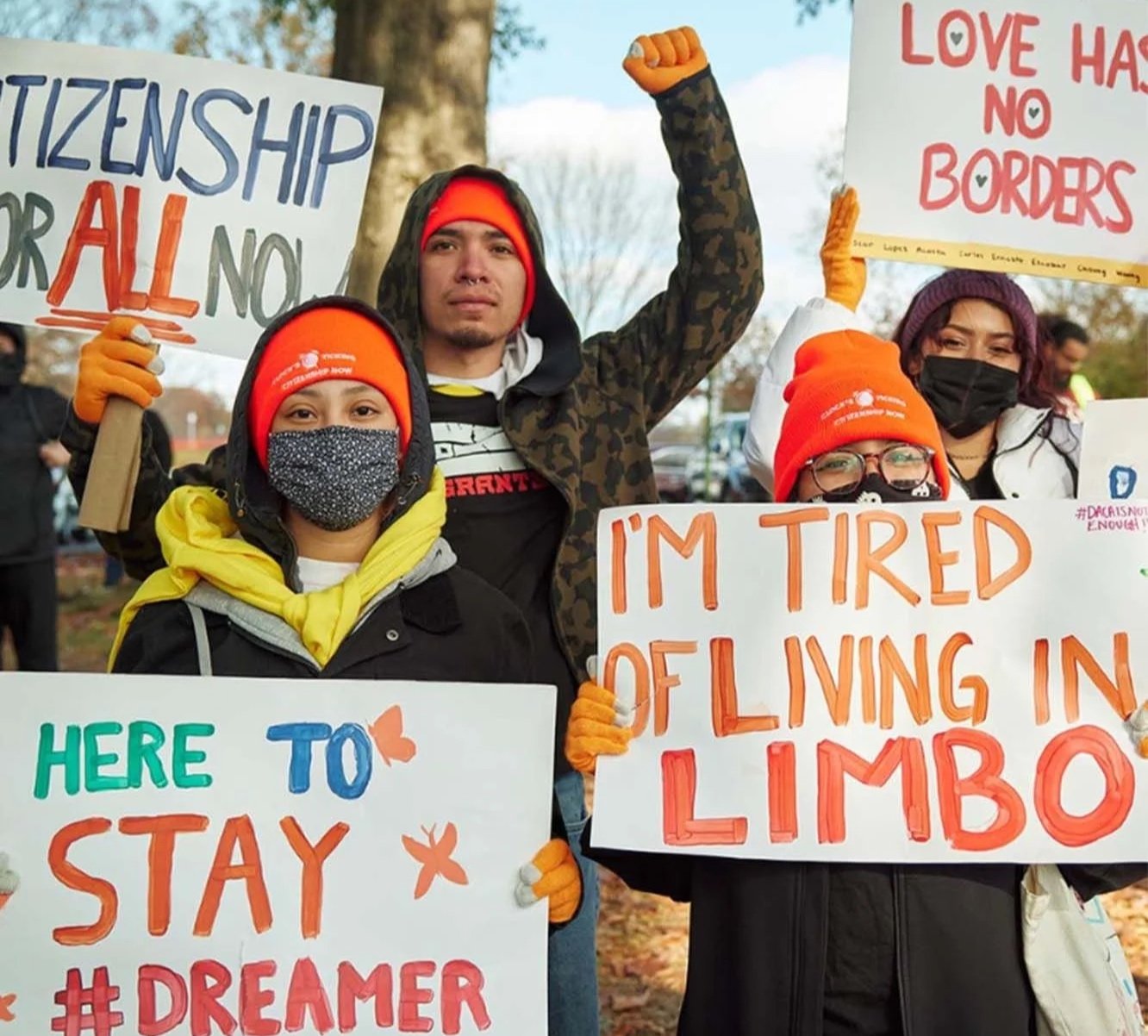
Photo by Will Martinez
Since January 2025—the Trump administration’s expansion of Immigration and Customs Enforcement (ICE) and enactment of anti-immigration policies—we have seen a rise in support for the immigrant community in the United States. As the topic of immigration is constantly in the media, it is impossible to avoid this heated conversation. Within this, there exists resentment in the Latino community in the United States. Against whom, it is not entirely clear. Often, it is directed at the present-day support for the immigrant community stemming from the inaction from Americans during previous administrations where ICE’s actions have impacted the Latino community for decades. However, this resentment derives from the fluctuating immigration policies that create confusion amongst Latinos in regards to their accepted status in America.
This confusion stems from the lack of consistency in immigration policy. In this country, immigration policies tend to depend on the executive branch’s beliefs and identity, creating an unstable perception of the structural framework of immigration policing, or lack thereof. Within this unstable system, distrust permeates in Latino communities. Typically, it is directed at the administration and president at the time immigration policies are being implemented. A key example of an immigration policy being repeatedly changed without reasoned administrative justification is the U.S Supreme Court’s decision in Department of Homeland Security v. Regents of the University of California in 2020. This case exposes the structural instability of immigration enforcement in the United States. By holding that the Department of Homeland Security’s rescission of Deferred Action for Childhood Arrivals (DACA) program violated the Administrative Procedure Act, the justices’ decision demonstrated the extent to which immigration protections and enforcement depend on the executive priorities, which are frequently shifting every 4 years. This instability of the policy stance on immigration contributes to Latino distrust and resentment, as they experience decades of fluctuating policies that undermine supposed immigrant protections.
In the United States, the Immigration and Nationality Act (INA) of 1952 guides immigration enforcement. The INA gives the United States general guidelines regulating entrance, residence, deportation, and naturalization of immigrants. However, each administration must decide how to use government resources. In other words, the executive leadership maintains authority over enforcement priorities, which includes deciding which groups to prioritize and who to deprioritize for deportation. By leaving immigration enforcement at the disposal of the executive branch, it leads to enforcement discretion in immigration law and thus prosecutorial discretion when it comes to deferred action. It is under this premise that DACA was created and became the focal point of Department of Homeland Security v. Regents of the University of California.
While Congress passes statues, agencies have to decide how to apply them. DACA was created as a response to the DREAM Act proposed in 2001 failing to pass, which would have helped undocumented children, giving them the opportunity to gain legal status and ultimately citizenship. Since this legislation failed to pass, DACA was created as a form of administrative discretion, meaning government agencies would get to decide how they enforce laws within the limits set by Congress. In other words, DACA applied this principle in its program where immigration officials used deferred action as a form of enforcement discretion. It is this decision-making power that creates administrative discretion.
While this discretion exists, administrative law constrains agencies by setting rules they must follow when making decisions. The Administrative Procedure Act of 1946 requires agencies to thoroughly explain their decisions, ensuring they follow fair procedure, and avoid unsupported actions. When an agency fails to do this, courts invalidate their decisions, thus holding them accountable to administrative law.
On June 15, 2012, the Department of Homeland Security, under Obama’s administration, created Deferred Action for Childhood Arrivals, more commonly known as DACA. The program was created with the intention to allow undocumented immigrants who came to the U.S as children with protections such as avoiding deportation temporarily, easier avenues to obtaining work authorization, and the ability to renew their status every two years. Oftentimes, undocumented immigrants in the program were called “Dreamers.” Since its inception, over 700,000 “Dreamers” have benefited from the protections of the program.
DACA was not only created for protective purposes, but also as a recognition of the lived experiences and contributions of “Dreamers.” Having been brought to the United States as children, “Dreamers” had an American upbringing and thereby lived a typical American life, often obtaining higher education and even serving in the U.S. military. However, “Dreamers” were never granted legal immigration status through DACA, only protection from deportation without a direct pathway to citizenship. Instead, DACA relied on prosecutorial discretion, as the government chose which individuals are prioritized for deportation. Thus, DACA emerged to provide undocumented immigrants protection from prioritized deportation. However, production of immigration protections have disparate measures, as in the case of administrations, they are extremely fragile yet are extremely dynamic.
In 2017, the Trump administration attempted to end DACA. Attorney General Jeff Sessions argued that DACA was unlawful for several reasons. The Trump administration contended that the inception of DACA was an unconstitutional exercise of executive power because immigration law is determined by Congress, like the Immigration and Nationality Act of 1952, which authorizes agencies like the U.S. Citizenship and Immigration Service, Immigration and Customs Enforcement for immigration-related functions as well as underpinning permanent residence and citizenship pathways. Nevertheless, the Trump administration insisted that through DACA, the Obama administration had created a new immigration program bypassing congressional authorization. Moreover, the Trump administration argued that DACA was very similar to the DAPA (Deferred Action for Parents of Americans) program, which was blocked in 2016 because the Supreme Court argued it violated the Administrative Procedure Act with President Obama exceeding his executive authority with the proposal of the program. Lastly, they argued that DACA did not follow immigration law. By giving “Dreamers” work authorization, individuals were granted lawful presence in the United States despite being undocumented. In other words, this administration believed that DACA undermined the legal immigration system created by Congress. The majority of the Trump administration’s argument relied on a critique of the Obama administration and a desire to limit the authority the executive holds when it comes to Administrative and Immigration law.
Nonetheless, the Obama administration justified DACA as an exercise of immigration enforcement discretion, allowing for the prioritization of certain individuals. Through DACA, “Dreamers” were protected and deprioritized from deportation. The executive's ability to decide who is and isn’t protected from deportations demonstrates that immigration protections are intertwined with executive orders, which further promotes the existing instability of Administrative Law.
Such instability was questioned by the case of the Department of Homeland Security v. Regents of the University of California. While lower courts blocked the rescission of DACA, the injunctions of lower courts led to a Supreme Court review in 2020. The majority opinion, spearheaded by Justice John Roberts, held that the rescission of DACA violated the Administrative Procedure Act (APA) of 1946 because the Department of Homeland Security failed to consider reliance interests, provide reasoned explanations, or evaluate alternatives to the DACA program. In this case, reliance interests—situations where people have organized their lives around an existing government policy—played an imperative role as the Trump administration aimed to change said policy, without considering the consequences and implications for the more than 700,000 “Dreamers” in the United States.
So, when the Trump Administration tried to cancel DACA, the Supreme Court denounced that DHS had failed to consider the reliance interest of “Dreamers” who were dependent on the program’s ensured employment, education, financial stability, and protection from deportation. More specifically, Chief Justice Roberts explained that the agency had a responsibility to evaluate the consequences for “Dreamers” before terminating the program, thus the rescission violated the Administrative Procedure Act.
However, the Supreme Court did not rule on whether the DACA program itself was legal. On the other hand, the dissenting opinion, led by Justice Clarence Thomas, argued that DACA was unlawful and that the Supreme Court should not require procedural justification to end a policy that is illegal. Nonetheless, DACA was procedurally protected. However, the case DHS v. Regents of the University of California proved immigration protections are not static. This becomes a problem in today’s day and age. While administrative law can slow down policy reversals, it cannot prevent inevitable changes in immigration policies. Since immigration protections are subjective to the executive’s priorities, depending on who holds office, policies can change every four years with the election cycle. The fluctuation of immigration policy in our system creates legal instability that impacts the immigrant Latino community.
In summary, the Supreme Court did not decide the legality of DACA. Rather, they focused on the Trump administration’s attempt to end the program, which they held violated the Administrative Procedure Act because of weak reasoning and a lack of consideration of reliance interests. Despite this, the Supreme Court focused on administrative procedure, not necessarily the substantive legality of DACA. Further proving that administrative instability in immigration enforcement is entangled with social consequences for the immigrant Latino community.
While DHS v. Regents of the University of California ended up blocking the Trump administration from removing the DACA program and protecting current “Dreamers,” ultimately the decision stated: DHS could end DACA, but it needed to follow proper administrative procedures as DHS failed to give reasoned explanation and consider reliance interests. DACA is an example of immigration protections depending heavily on administrative discretion, which changes according to each administration. In other words, DHS v. Regents of the University of California proves the instability of immigration policies, unless they are protected by legislative laws. Although administrative law requires agencies to justify change and consider reliance interests, the decision in Regents shows how immigration protections are structurally unstable because they depend on the executive’s priorities rather than the legislative permanence of legislation.
Most people won’t sit down and read the intricacies of the DHS v. Regents of the University of California case, let alone stay informed with every immigration-related case brought up to courts. In fact, most stay informed through experiences or word of mouth. However, we have still seen a rise in immigrant support in the United States since President Trump assumed his second term in 2025. This rise of support, while vital, lacks a crucial component if Americans want to demonstrate solidarity with the immigrant community. One must acknowledge the historical lived experiences of Latino immigrants in the United States prior to the oppressive persecution Trump’s administration promotes. In fact, Latino immigrant communities have experienced persecution for decades. Oftentimes becoming informed of changing immigration policies by living or witnessing raids, deportation threats, and undergoing the grueling process of seeking protections. Yet, when policies repeatedly change, Latino’s trust in the government decreases and resentment grows. We begin to see that legal inconsistencies in policies produce social consequences–especially since Latino immigrant communities have lived through these inconsistencies within immigration policies for decades.
In the end, DHS v. Regents of the University of California revealed the instability of immigration policy. While the Supreme Court enforced procedural requirements, and likely always will, the underlying system will still continue to allow dramatic policy swings. These policies change every four years or so, it takes a toll on many Latino immigrants, many of which come to the U.S. with an American Dream—one that holds aspirations and hopes for a future that is secure not only for themselves, but for their descendants. The American Dream dissipates when immigration policies fail to consider the reliance interests of 22.7 million Latino immigrants in the United States. When one’s dreams become shattered, resentment grows. Why did the Obama administration fail to solidify and protect DACA and leave it to executive discretion knowing his presidency was finite? How can we blame Trump if Obama failed to protect “Dreamers”? Is Trump truly the one to blame for spearheading drastic and oftentimes illegal methods of deportation when previous administrations failed to ensure immigration protections?
Perhaps Latino resentment is justified. When one becomes constantly disappointed by administrations and the American Dream becomes unattainable, it is understandable to feel betrayed by the system. In a country where our system fails Latino immigrants—who make endless contributions to American society—resentment further proves that our country fails to truly see Latinos as vital members of society.
To remedy the policy volatility, we need predictable legal procedures as they are essential to restoring trust and solidarity within immigrant communities. It could involve creating greater additional procedural preventions to immigration policy changes or placing an additional emphasis on congressional legislation when it comes to creating immigration-related programs in order to deter sudden changes as well as more checks and balances on the executive branch. Perhaps, through these additional legal procedures, the country can begin the development of a more stable administrative framework. Once policymakers begin striving for a stable legal system we may begin to see the fractures in the system begin to be sutured back together.
Over time, consistency will soothe Latino resentment, even if it does not go away immediately. Eventually, we might grow to accept there is no need to point fingers, but to support people's human rights regardless of documentation status. But first, we must recognize that this Latino resentment is valid. Not only because it exists, but because Latino immigrants have been informed through lived experiences that have impacted them for decades. They have experienced many administrations—not just Obama and Trump—that have caused harm. Therefore, we can surmise resentment is real, but it does not need to be everlasting. It can be reconciled with and amends can be made if and only when our immigration dialogue and protests are rooted in the Latino immigrant experience in the United States. Once we begin to see and hear Latino immigrants, we can begin to see the resentment dissipate and ensure they are protected in a world where hate tries to prevail. As Bad Bunny said, “The only thing more powerful than hate is love.”
Catherine Enriquez (CC ‘29) is a Staff Writer majoring in Political Science and Hispanic Studies.
Edited by Rafael Vanuno