
Changes to Mexico’s Amparo: What Can a Citizen Do When the Government Doesn’t Listen Anymore?
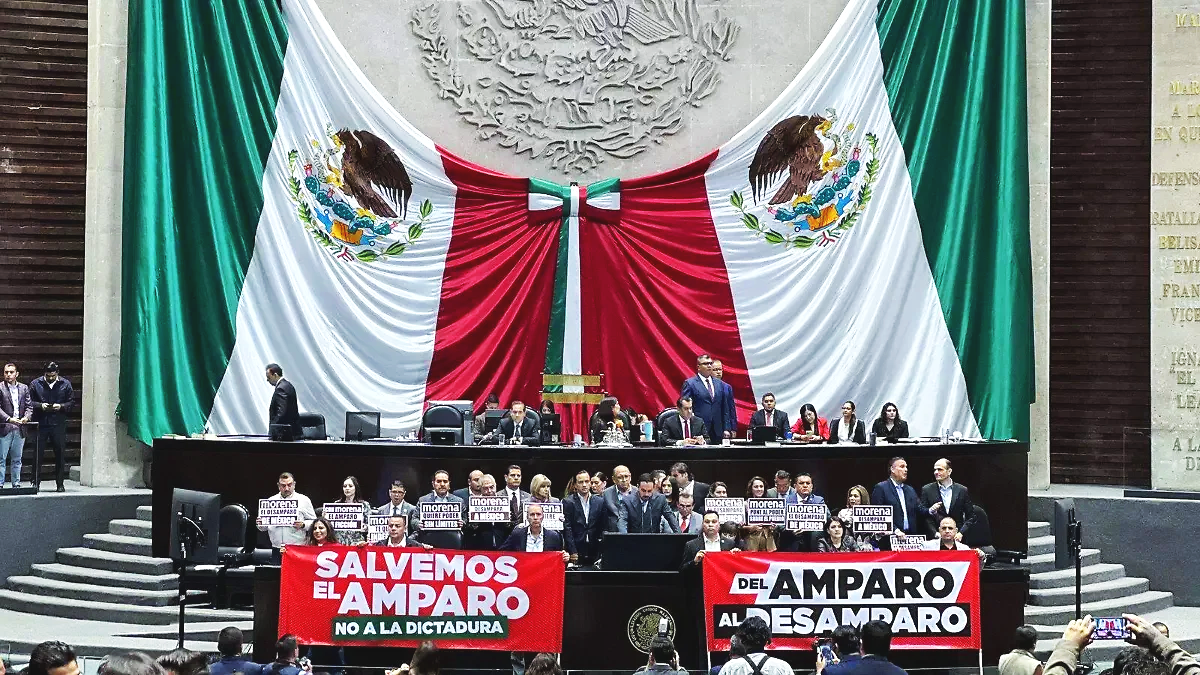
On Tuesday, October 14, 2025, lawmakers approved a general reform of the Amparo Law. / Photo by Ivonne Rodríguez for El Sol de México.
In Spanish, amparo means protection. In the Mexican legal system, an amparo is a legal procedure that protects individuals from unconstitutional acts, laws, or omissions by authorities. Embedded in the Mexican constitution since the mid-19th century – developed after the 1857 Constitution to limit arbitrary government power – the amparo was originally designed as a mechanism to ensure fundamental freedoms are protected. For generations, the amparo has been the legal tool that allows ordinary people to take their fight to a judge when they believe an authority violates their rights protected by the Constitution, ignores them, refuses to release information, or acts arbitrarily. The recent reform introduced by Mexico’s President Sheinbaum and the broader Morena party, however, weakens the constitutional protections provided by the amparo, specifically for journalists and activists. It creates new barriers to filing amparo lawsuits, redefines what counts as “harm” and “protection,” and dilutes an important check on the executive.
For years, the amparo has been one of the few legal tools that allowed journalists to demand state protection, challenge government negligence, and push back when authorities failed to address threats. Weakening this legal protection leaves those who report on violence, governmental corruption, and organized crime even more exposed. Indeed, Mexico is one of the most dangerous countries in the world to be a journalist. Since 2000, 175 journalists have been killed in Mexico in connection to their work. In 2024 alone, journalists Roberto Carlos Figueroa and Patricia Ramirez Gonzalez were murdered after receiving threats. In states like Tamaulipas, Veracruz, and Guerrero, many reporters practice self-censorship because speaking the truth can get them assassinated. These realities show why a strong amparo has been essential: in a country where advocating for the truth can cost one’s life, weakening one of the only legal protections available to journalists threatens not just individual reporters, but the public’s access to truthful information itself.
Similar to journalists, activists face the same fate. From 1995 to 2019, it has been confirmed that 147 activists, across different types of social causes, were assassinated. During recent years, indigenous land defenders in Oaxaca Chiapas, Chihuahua, and Sonora have been murdered for opposing mining projects, illegal logging, or territorial dispossession. These are exactly the communities that rely on the amparo when authorities fail to protect them. In practice, this protection comes through emergency filing and injunctions that force a judge to immediately halt a harmful action, order the government to provide security measures, or compel authorities to respond to threats they had ignored. Although the government claims the amparo is being “abused,” data from Mexico's National Human Rights Commission shows that thousands of precautionary measures and protective requests are filed each year, many coming from communities facing violence or environmental harm. Weakening the amparo therefore does not target frivolous lawsuits; it strips away one of the only legal tools people have to defend their land, their safety, and their lives.
The government argues on the premise that these changes will “speed up” the courts and stop people from abusing the amparo. However, when analyzed closely, this set of changes reveal something very different: it becomes harder for people to file an amparo, harder for judges to stop harmful government actions, and easier for authorities to ignore the rules without facing consequences. The reform amends multiple provisions of the Amparo Law, requiring petitioners of the amparo to meet stricter procedural requirements before a judge can even review their case, effectively making amparo protection harder to access for ordinary people. Passed rapidly through congress in October 2025 despite widespread criticism from legal experts and civil society groups, the reform does not make the process more agile. Instead, it introduces three major changes to the amparo that significantly weaken its constitutional protections.
First, now one can only file an amparo if they can prove a “real, actual, and specific” harm (Article 5). This change redefines what counts as “harm” and, for journalists who face intimidation and threats, makes access to protection much easier to deny. For example, suppose Journalist A is receiving death threats from organized crime. If Journalist A has not yet been physically attacked, a court could now dismiss the amparo on the grounds that the harm is not sufficiently “actual” or “specific,” even though the threat is credible and ongoing. As a result, the reform forces journalists to wait for harm to fully materialize before seeking judicial protection. Under the previous framework, a judge may have admitted the claim and ordered protective measures without requiring the journalist to wait until the threat escalated into “real, actual, and specific” physical harm. This new requirement is dangerous, especially in a country where journalists and activists are frequently victims of threats, aggressions, kidnaps, and even murder by organized crime.
Second, judges also now have 90 days instead of 60 to make a decision. Those extra 30 days matter because if a governmental authority is already violating one’s rights, waiting longer for protection can mean the damage is irreversible before the court steps in. This change turns time into a barrier to justice for cases involving press freedom, personal security, or ongoing state abuse. When we allow longer delays, the reform not only weakens the protective function of the amparo but also exacerbates harm and uncertainty for those seeking timely relief.
Third, and perhaps most concerning, the reform weakens the penalties for authorities who disobey court orders. Before the reform, if an official ignored an amparo ruling – especially a suspension meant to stop an ongoing harm – they could face serious consequences, including fines, removal from office, or even criminal charges for contempt. This system mattered because in a country with high levels of impunity, the threat of sanctions was often the only thing that forced authorities to comply. Now, the reform softens these penalties by shifting many violations from criminal to administrative sanctions by allowing authorities to argue that their non-compliance was “justified.” reducing a judge’s ability to hold them accountable. The government claims this will “streamline” procedures, but in reality it signals to officials that ignoring a court order is less risky than before. Human rights organizations like Centro Prodh have already warned that it will make it easier for officials to disregard the law without facing consequences.
Reforming the amparo in a way that makes it less effective doesn’t make the system “faster” or “modern,” as Morena claims. It instead increases people’s vulnerability and concentrates more power in the government – especially to Morena. These reforms don’t come out of nowhere. Mexico has a long history of one-party dominance. First it was the PRI, which held uninterrupted power in Mexico for almost 70 years. Today, Morena holds enormous political power. And when one party controls the presidency, Congress, and has major influence over the courts, weakening the amparo means weakening one of the last checks that citizens have. This reform is part of a broader repertoire of changes across jurisdictions that invoke the rhetoric of “modernity” and agility in governance but, in practice, dilute checks on executive power by concentrating decision-making authority within a single ruling party. Reforms like these raise important questions about the relationship between law and justice: whether legal change continues to serve constitutional protection or instead becomes a mechanism for limiting it. In the case of Mexico, this reform suggests the latter – a troubling move away from justice within the law.
Mexico cannot afford reforms that make it easier to silence journalists and activists. At the very least, we must stay informed. The people of Mexico must – today and always – vocalize and challenge the enormous political and economic interests that seek to obfuscate the protection of freedoms the amparo was originally designed to safeguard. When we are able to understand what these reforms mean – their legality and their every-day implications – it becomes much harder for any government to quietly weaken our constitutional rights.
Brigette Radilla, CC’28, is a Staff Writer majoring in Economics and Latin American & Caribbean Studies. She is interested in politics and how they shape social activist movements in Mexico.