
Independence for Puerto Rico: The Only Just Solution to 127 Years of Human Rights Abuses
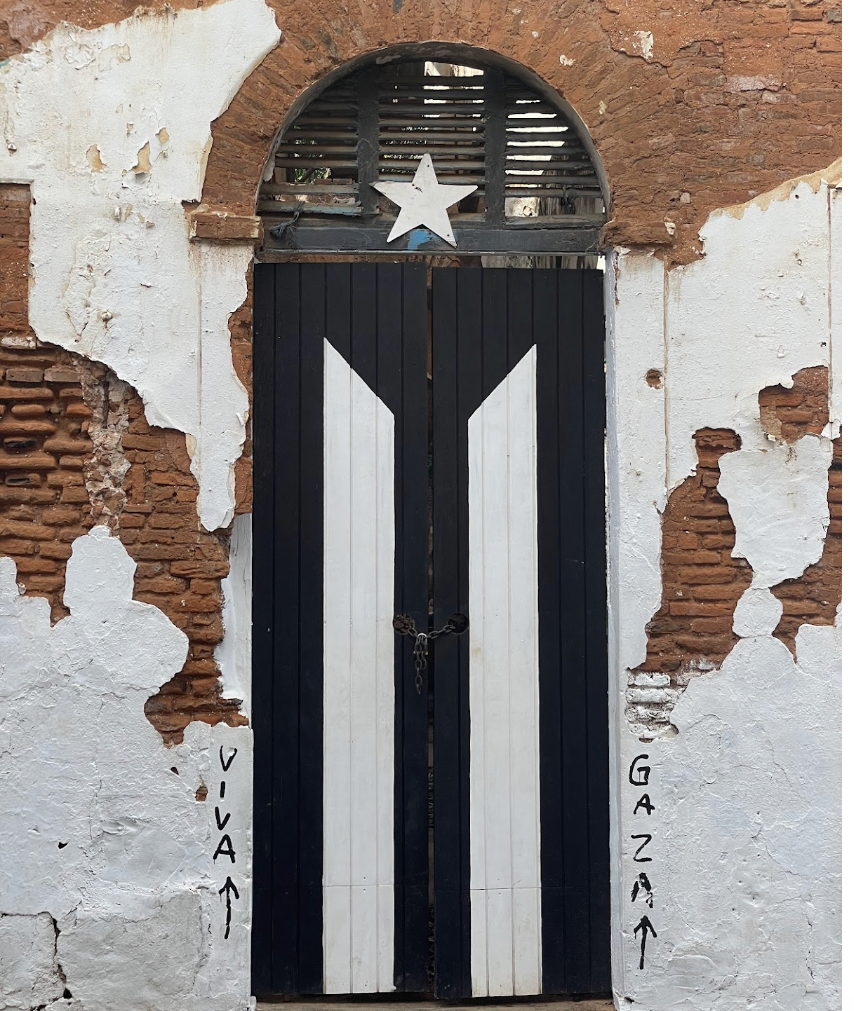
Photograph courtesy of Juan F Rosado Del Ríos
The United Nations adopted the Universal Declaration of Human Rights (UDHR) in 1948 with the goal of preventing the atrocities carried out by the Axis powers during World War II from recurring. However, at the close of the war and the establishment of the UN-centered new world order, the Allied powers were forced to reflect upon their own imperial ventures and ask themselves, “How different are we really from some of the actions of these Axis powers?” One of the countries was the United States, which in 1898 occupied the Philippines, Cuba, and Puerto Rico from Spain during the Spanish-American War. Of these territories, Puerto Rico is the only one that remains a colony. The United States may call it a “commonwealth,” implying that their wealth is being shared equally with Puerto Ricans. However, that premise is false. Despite signing on to the UDHR, the United States has been violating many of Puerto Ricans’ human rights, most blatantly under articles 19 and 21 of the UDHR.
Article 19 of the UDHR states that “Everyone has the right to freedom of opinion and expression; this right includes freedom to hold opinions without interference and to seek, receive and impart information and ideas through any media and regardless of frontiers.” The most blatant and widespread manifestation of this violation can be seen in the U.S. Federal Bureau of Investigation’s (FBI’s) “Carpetas” or “Files.” These “Files” tracked nearly every movement and action of any person suspected of affiliation with Puerto Rican nationalist or independence organizations. Furthermore, these files were weaponized to get those individuals fired from their jobs, imprisoned, and other forms of retaliation. Another way in which the United States violated Puerto Ricans’ human rights under Article 19 is through the “Gag Laws” of 1948 that made it illegal to engage in any behavior the colonial government deemed “subversive.” This change included owning a Puerto Rican flag and singing “La Borinqueña,” Puerto Rico’s national anthem.
The United States has also violated Puerto Ricans’ human rights under Article 21 of the UDHR, which states that “Everyone has the right to take part in the government of his country, directly or through freely chosen representatives.” In 1950, the United States allowed Puerto Rico to pass its own constitution, permitting Puerto Ricans to elect their own governor and representative legislature. However, Puerto Rico does not have full political power given they cannot vote in the United States’ presidential election and have no voting representation in Congress. Puerto Rico’s lack of self-determination was exacerbated in 2016 when President Barack Obama signed into law the Puerto Rico Oversight, Management, and Economic Stability Act (PROMESA). With the goal of stabilizing Puerto Rico’s spiraling debt crisis, PROMESA created an unelected fiscal oversight board that had the power to control which laws and budgets were, or were not, passed by the Puerto Rican government. Initially, PROMESA seemed like a compelling initiative. Now, despite being elected by Puerto Ricans, the Puerto Rican representatives and governor could be controlled and manipulated by a federal government Puerto Ricans did not elect.
The UDHR is not legally binding, nor is it a treaty or a direct legal remedy. The United States’ endorsement of the Declaration in 1948, however, represented a commitment to a set of moral and civic responsibilities articulated in the aftermath of World War II. For a nation that has long positioned itself as a global champion of democracy and holds other nations, especially in the developing world, accountable to these human rights standards, this commitment carries weight. The United States has failed to uphold these principles in its governance of Puerto Rico and thus departed from the human rights standards it helped establish and affirm. The Puerto Rican question today is one tied to notions of dominion, imperialism, and the erosion of human rights in a postcolonial world.
So what is the solution? The answer frequently posed is statehood, as theoretically, this would bestow equality under United States law to Puerto Ricans. However, if Puerto Rico were to become a state, the United States would commit another human rights infraction. This time under Article 15 of the UDHR, which states that “1. Everyone has the right to a nationality” and “2. No one shall be arbitrarily deprived of his nationality nor the right to change his nationality.” If statehood were to be imposed, any political distinction that may have contributed to Puerto Rico’s unique national identity would be erased. There is a song by Puerto Rican folk singer Andrés Jiménez titled “La estrella sola” (“The independent star”), that, when translated into English, sings “I want my Borinquén to be sovereign and free, because the star on my flag doesn’t fit on the American one.” Borinquén is a name given to Puerto Rico that is derived from the indigenous Taínos’ name for the island, Borikén. Puerto Ricans’ sense of identity is strong enough that if Puerto Rico were to become a state, Puerto Ricans’ identity would not immediately disappear. However, over a long period of time, it is nearly impossible to maintain a sense of national identity without an actual nation-state. As happened in Hawaii after it became a United States territory in 1898, Puerto Rico would likely lose its mother tongue and Puerto Ricans would become a minority in their own archipelago. Once Puerto Rico becomes just another star on the American flag, any chance of it working in its self-interest and functioning as its own Latin American nation would be crushed.
The only solution to prevent Puerto Rico’s cultural erasure and ensure full political autonomy is independence. The path to independence will not be an easy one. Puerto Rico has a long way to go before it would even be able to survive as an independent state, especially given the millions of people reliant on United States federal aid for housing, food assistance, or Medicaid and Medicare. To survive as an independent nation, Puerto Rico would need to find sources of revenue to replace those aid programs as well as establish a network of trade that would benefit them. It would need to invest in its port infrastructure in order to more effectively export and import goods, and it would need to strengthen its own institutions. Despite all the effort, time, and money it would take for Puerto Rico to reach a state in which it is able to thrive as an independent country, however, it would be worth it to finally achieve the dignity the archipelago and its people deserve. Independence is necessary because the Puerto Rican question is not only one of colonialism and imperialism, but also of self-determination and national identity. Preserving this patrimonio is worth the effort and the time.
The United States Constitution may tolerate Puerto Rico’s territorial status, but human rights do not. After more than a century of political limbo, Puerto Rico is entitled to self-determination, and the only way to achieve true self-determination is through independence. As Andrés Jiménez sang, Puerto Rico deserves to be an independent star, like the one on our flag. We the Puerto Ricans deserve to finally be free.
Juan F Rosado Del Ríos, CC ‘29, is a Staff Writer studying Sociology and Latin American & Caribbean Studies. He is interested in Puerto Rican politics and the effects of American colonialism throughout Latin America.