
Letter from the Editor: An Indictment of Maduro’s Authoritarianism
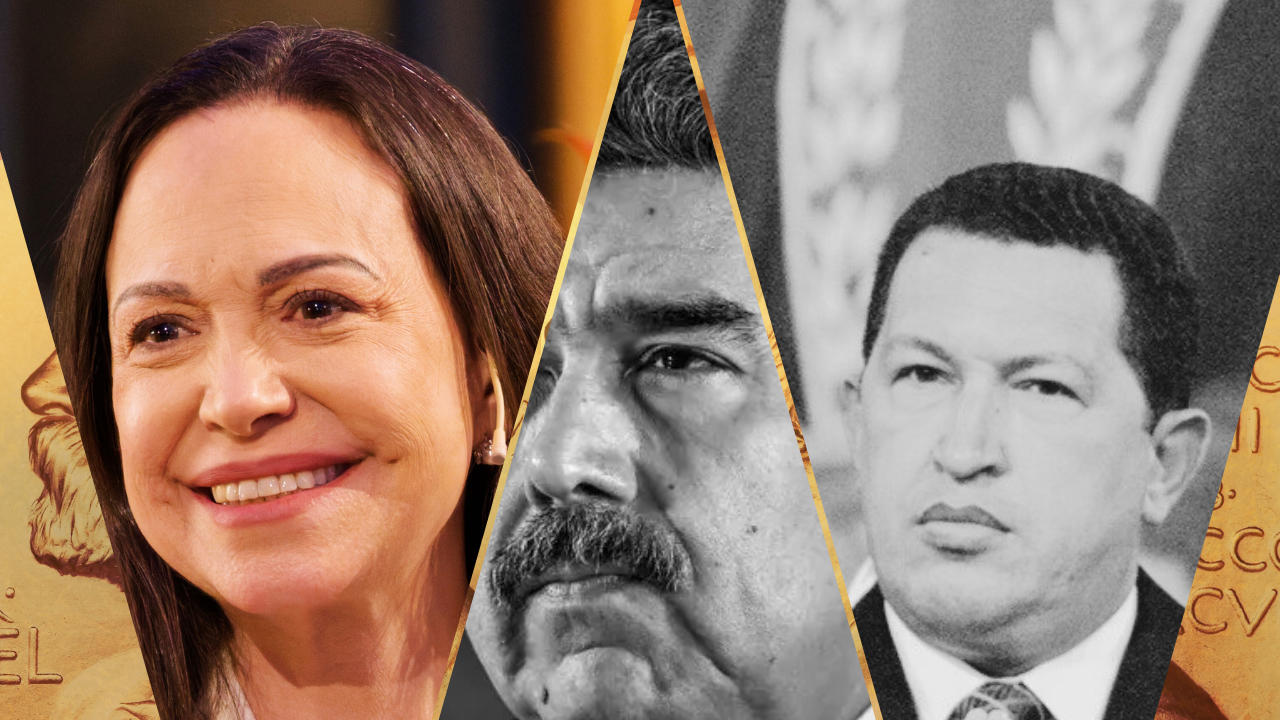
Artwork produced by the HPLR Editorial Team.
Nicolás Maduro of Venezuela is an authoritarian and obstructor of the peaceful transition of power.
His presidential illegitimacy has been evident to many for a long time. Prior to the 2024 presidential election, many Venezuelans suspected that the National Electoral Council – the body responsible for organizing elections – was controlled and radicalized by Maduro’s regime. These claims were met with intense criticism from pro-Maduro groups, who argued that the opposition was making allegations without sufficient evidence. I must admit that, in hindsight, some of these critiques make good points, since the opposition’s past efforts to overthrow the regime often seemed improvised. For example, in 2019, Juan Guaidó, then President of the National Assembly, declared the 2018 presidential election illegitimate and swore himself in as interim president pursuant to Article 233 of the Venezuelan Constitution. That article provides that when the presidency is deemed vacant, executive authority temporarily transfers to the President of the National Assembly until free and fair elections are held. Guaidó’s claim to authority thus rested on a contested constitutional interpretation rather than an outright seizure of power. In practice, however, the move proved ineffective, culminating in political arrests, internal corruption scandals, and Guaidó’s eventual exile.
Contextualized in the pre-2024 moment, pro-Maduro groups could perhaps argue that the opposition lacked centralized organization, ongoing momentum, and international support. However, there were some drivers that made the 2024 presidential election a strategic opportunity for the opposition. This shift was driven in part by the 2023 Barbados Agreement, which promised basic electoral guarantees, and by the reemergence of María Corina Machado’s leadership.
Following the collapse of the Guaidó movement, Venezuela’s opposition entered a prolonged period of fragmentation and declining public trust. This dynamic shifted in 2023, when María Corina Machado won the opposition primary election and emerged as the unity figure for the 2024 presidential contest. Maduro deemed Machado ineligible on the basis of alleged administrative sanctions and political disqualifications lacking due process. The opposition then nominated Edmundo González as its presidential candidate, while Machado continued to coordinate the opposition’s unified political project. As a result, the opposition entered the 2024 presidential election unified, with renewed public hope and international supervision – creating a rare opportunity for democratic transition.
On July 28, 2024, opposition organizers successfully collected and digitized approximately 83 percent of electoral tally sheets (“actas”) from polling stations across the country. Analysis of these actas indicated that Edmundo González received roughly 67 percent of the vote, while Maduro obtained approximately 30 percent. These results were published publicly, accompanied by thousands of digitized records from across Venezuela. Maduro dismissed the findings as fraudulent. Yet the authenticity and consistency of the actas were reviewed by multiple independent bodies, including The Associated Press, The Washington Post, Colombia’s Misión de Observación Electoral, and election-forensics scholar Walter R. Mebane Jr. of the University of Michigan. This evidentiary strategy confronted pro-Maduro narratives with what they had long obscured: concrete evidence that the regime manipulates electoral outcomes and controls the institution trusted with certifying them.
The regime refused to transparently adjudicate the dispute or publish official results. This decision thus violated the Venezuelan Constitution — particularly Article 293, which vests the National Electoral Council electoral power with the independent responsibility to organize, oversee, and credibly certify elections capable of resolving political contestation. While it was not a novelty for opposition leaders and supporters to suspect that the Council was controlled by Maduro, the 2024 presidential outcome was different. The Council’s failure to provide remedies or transparent verification infringed their constitutional obligations and further eroded the credibility of Venezuela’s electoral jurisprudence.
The opposition has grown in coherence and resolve. Much of this momentum is thanks to María Corina Machado, whose leadership has staunchly advanced peaceful resistance and sustained pressure. She leads, what I believe, is a consequential movement that redefines opposition strategy in Latin America by strengthening the will of the majority.
Today, January 3, 2026, the United States captured Nicolás Maduro and conducted military operations in Caracas, Venezuela. The persistent question has now shifted from Maduro’s electoral fraud to the implications of U.S. intervention.
For instance, Elias Ferrer of The Guacamaya, an independent Venezuelan outlet, warns that U.S. intervention could open a “Pandora’s box,” empowering armed and criminal actors and destabilizing the country. Similarly, Mexican President Claudia Sheinbaum has emphasized non-intervention and sovereignty as guiding principles in responding to Venezuela’s crisis. Others however say intervention (which just happened) may be the only remaining mechanism to remove Maduro from power. Ricardo Hausmann of Harvard University has argued that a pro-Maduro National Assembly could impeach the president and invite foreign military action to remove him, drawing parallels to the 1989 U.S. invasion of Panama. In response, David Smilde, professor at Tulane University, cautions that Venezuela is not Panama – and that such analogies obscure critical differences in scale, regional consequences, and institutional context.
Machado challenges prevailing anti-intervention critiques by arguing that Venezuela had already been effectively invaded – prior to January 3, 2026 – by Russian and Iranian agents, terrorist organizations such as Hezbollah and Hamas, and Colombian guerrillas and drug cartels operating with regime acquiescence. I agree. Much of this anti-intervention debate is shaped by distance. It is easier to demand morality and diplomacy when one does not bear the daily costs of authoritarian repression. The opposition has pursued dialogue with Maduro for years, seeking negotiated solutions to Venezuela’s humanitarian and economic crises. These diplomatic efforts have repeatedly failed. It is therefore ignorant for some to condemn one form of foreign intervention while tacitly legitimizing others. This inconsistency is paradoxical and leads to a selective application of sovereignty.
Perhaps Nobel Peace Committee President Jørgen Watne Frydnes makes my point clearer:
“People living under dictatorships often have to choose between the difficult and the impossible. Yet many of us, from a safe distance, expect Venezuela’s democratic leadership to pursue its aims with a moral purity their opponents never display. This [expectation] is unrealistic. This [expectation] is unfair, and it shows ignorance of history. María Corina Machado has participated in dialogue processes for years. She’s never rejected the principle of talking to the other side, but she’s dismissed empty processes. Peace without justice is not peace. Dialogue without truth is not reconciliation.” I agree.
Frydnes frames “moral purity” as an external moral demand imposed from a position of safety, a top-down expectation that prioritizes abstract ideals over lived reality. I describe the alternative as a bottom-up cultural prison, in which only those who endure Maduro’s repression are expected to act with restraint, patience, and procedural perfection, even as the regime governed through violence and impunity. What I find deeply troubling is how authoritarian leaders can rise – and persist for years – through democratic mechanisms they control from within. Demonstrating that Maduro lost the 2024 election, while necessary, proved insufficient on its own to dismantle the structures that sustained his rule. He was long shielded by a constitution manipulated to grant impunity, by a military apparatus sworn to his loyalty, and by a judiciary that obfuscated justice through law. This pattern reflects a broader authoritarian playbook replicated across regimes. Governments in Cuba, Russia, Iran, China, and Nicaragua – as well as allied non-state actors – share techniques, technologies, and propaganda to preserve inhumane, authoritarian rule.
Should we then demand moral purity from authoritarians?
No, we should not.
We should not demand moral purity because Maduro—through widespread human rights violations and economic abuse—obstructed free and competitive elections, suppressed electoral results, and violently repressed post-election protests through killings, forced disappearances, torture, and mass arrests. To insist that the opposition respond to such a regime with perfect restraint, procedural idealism, or endless dialogue is to misunderstand the asymmetry of power that defined this period. And to ignore the terror Venezuelans endured daily is idle.
To you, dear reader, I offer not a conclusion but an invitation. Meditate – and write – on the questions that I believe will guide Venezuela in 2026: How should President Sheinbaum’s commitment to non-intervention and sovereignty be understood in light of María Corina Machado’s contention that Venezuela had already been invaded prior to January 3, 2026? Perhaps most importantly, under what conditions, if any, is U.S. intervention legitimate – or even complementary – to democratic restoration?
José Caballero, CC ’26, is an Editor-in-Chief of the Columbia Hispanic Pre-Law Review majoring in Statistics and Cognitive Science. His work has appeared in USA Today and Harvard Public Health Magazine, and he has been quoted by ABC News and The Wall Street Journal.